Trigger Warning: Homelessness, Mental Illness, P.T.S.D., Suicide, L.G.B.T.Q+, Racism and Discrimination, Disability, Elderly struggles, Sexual Aasault
Special consideration: sorry to all but due to unforseen circumstances this post is a day late. That doesn’t make the message any less important.
A note about today and it’s significance.
I am not sure if I even have an audience yet, let alone one anywhere other than the U.S. but for those of you who may be reading this and who may not be from the United States, today is the federally recognized day of observance known ad Veterans Day. It is a day of honoring all former members of the various branches of the military over the past.
I know that through out the world, and even in this country there are many different thoughts, beliefs, feelings, and opinions about war, government, and the armed forces. I also know that no matter a person’s beliefs, even those that are different from my own, that person is still a human being deserving of respect, compassion and empathy.
The focus of this blog for today is not to get politically divisive, argumentive, or overly extremely nationalistic as I have love for all people as humans regardless of nation and recognize that while there are differences, there are also many similarities between us all. We all laugh and cry in similar ways for example.
Instead of trying to pit people against each other, this post is to highlight a serious issue in this country that I believe to be a grave absence of justice. That is the way in which many of our veterans are treated upon returning home to the nation they risked their lives to serve.
About our veterans
There have, over the course of the history of the United States of America been various different groups of soldiers such as “Green Mountain Boys, Buffalo Soldiers, Tuskegee Airmen, Women Airforce Service Pilots, Screaming Eagles, and Green Berets” (Vespa, 2020).
Many of the veteran in our country’s history had very little to no choice in serving due to the drafts for the wars from the Revolutionary War to the Vietnam War.
A large number of the veterans from the Vietnam War still being alive today and making up the largest population of U.S. vets (Vespa, 2020).
While the number of veterans has declined with 26.4 million being reported in 200 and 18.0 being reported in 2018 (Vespa, 2020), the problems faced by many veterans have not stopped
The reality of Veterans who are minorities
- Women Veterans
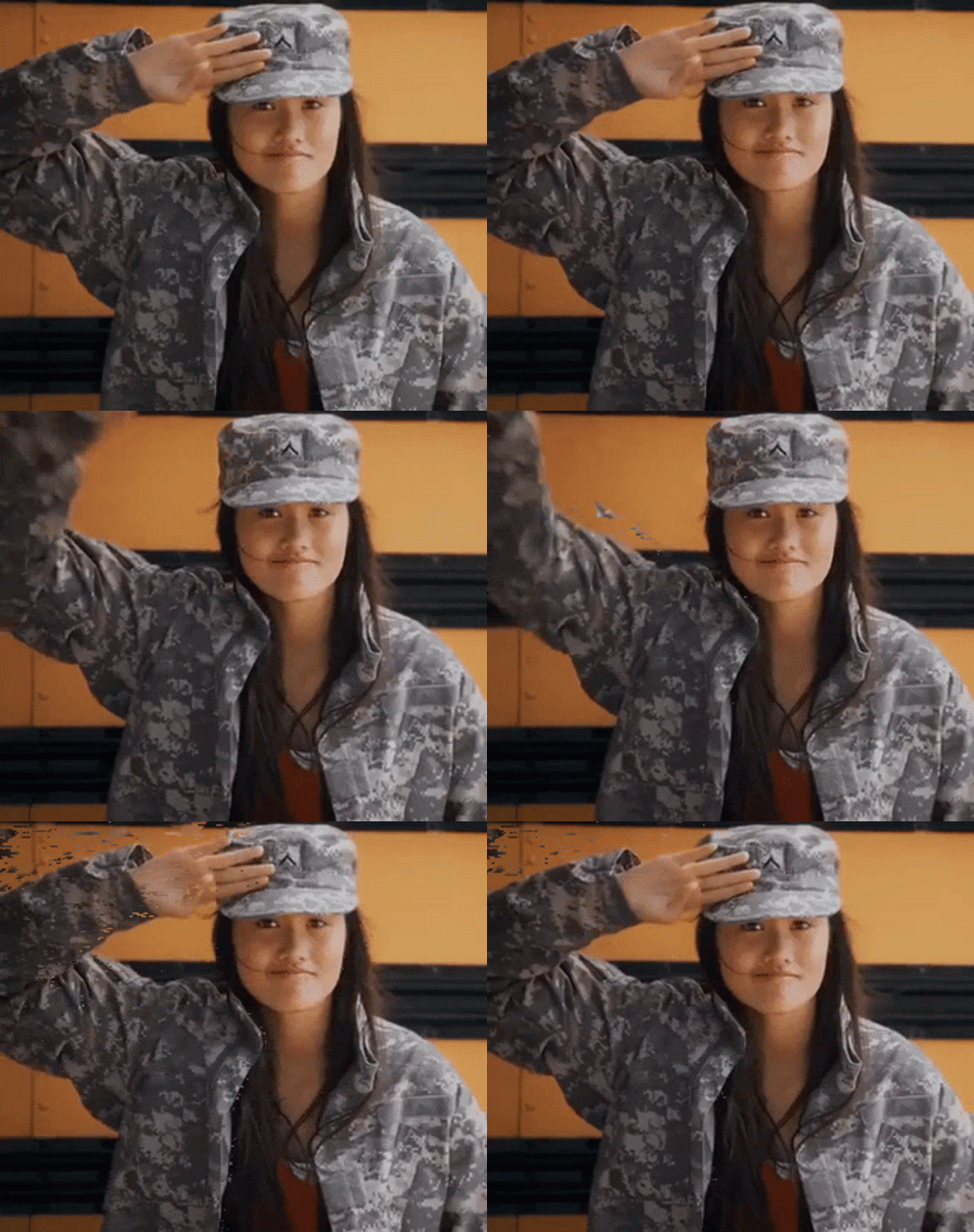
It should be noted that about 9% or 1.7 million veterans are women and that number is on the rise with an estimated number of 17% of the veterans in the US bring women by 2040 (Vespa, 2020).
Women face many barriers still to equality in overall society and in the Military. Women who serve should be treated with the dignity and respect that they deserve and should not be seen as less capable of service or like they don’t belong.
A large number of Women Veterans have had experiences of Sexual Assault while in the service women veterans are also more likely to develop PTSD (N.N., 2022).
Women who have been in the service are also more likely than women who have not been in the service to die by suicide (N.N., 2022)
The number of women veterans has increased dramatically between 2006 and the present; many homeless women veterans are single parents who can not find services that are geared towards women veterans (N.N., 2022).
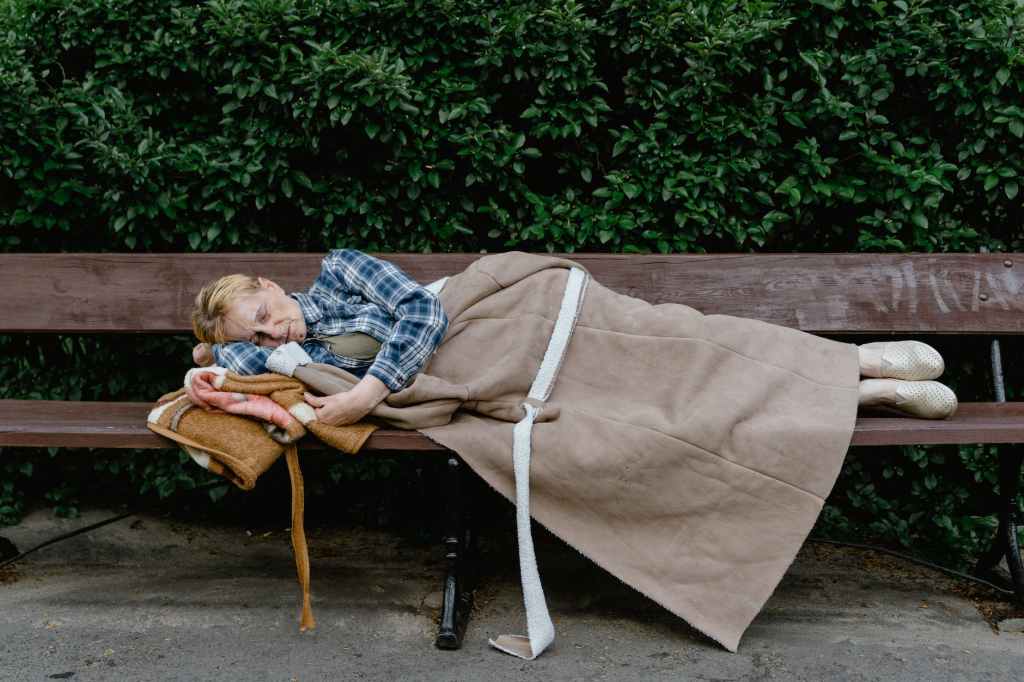
The Top 3 Health Conditions for women Veterans Being Treated in VA Hospitals.
- PTSD
- hypertension
- depression
“Approximately 83% of women veterans receive their health care from non-VA practices” (N.N, 2022).
- LGBTQ+ Veterans
The veteran non profit organization known as DAV states on its website that, “There are an estimated 1 million lesbian, gay, bisexual, transgender and queer veterans in the United States, and these veterans can face increased health risks and unique challenges in accessing quality health care” (DAV, 2022).
Common mental health conditions and struggles among LGBTQ+ veterans
- Anxiety
- Suicidal thoughts and tendencies.
- Depression
- Bipolar disorder
- PTSD
- Homelessness
- Problems stemming from sexual assaults.
Important Notice
It is 100% true that the problems faced by LGBTQ+ veterans are faced by other groups of veterans and by any group in the civilian population.
It is also 100% true that any one person can have any combination of identities and any one of those identities can be part of an oppressed group placing that person at a higher risk for these challenges.
That being said, the research shows that these issues are more common and more severe for LGBTQ+ service members and veterans with LGBTQ+ males experiencing the highest rate of mental health conditions and addiction struggles.
On the website Ctveteranslegal.org, a reason given was that veterans are already at a higher risk due to what they experience while serving, and LGBTQ+ Veterans experiencing extreme mistreatment and bullying.
LGBTQ+ individuals make up one of the least protected population group all over the world and even still in the United States. For nearly all of U.S. history we (LGBTQ+ individuals) were barred from military service.
Eventually the “don’t ask, don’t tell” policy was put in place making people who were not heterosexual have to hide who they were to avoid being kicked out of the service. While repealed in 2009 this act had damaging effects and created a toxic environment for LGBTQ+ service members (CVLC, 2020).
And then in 2019 the Trans Exclusion Policy was put in place preventing individuals who are transgendered from serving as the gender they identify as, preventing individuals with gender dysphoria from serving all together (CVLC, 2020).
Another serious risk for LGBTQ+ service members is the risk of receiving a discharge status of Other-than-Honorable just because they face discrimination once someone else finds out that they are not cis gender or heterosexual.
While this is not exactly the same as a Dishonorable Discharge, it still comes with harmful, and life changing consequences.
This lable still carrys with it harsh stigma. A service member labled with this status can possibly not be receive “veterans’ health care, income disability benefits, employment opportunities”or other similar benefits made for veterans to help them live adequately. (CVLC, 2020).
- Eldery Veterans
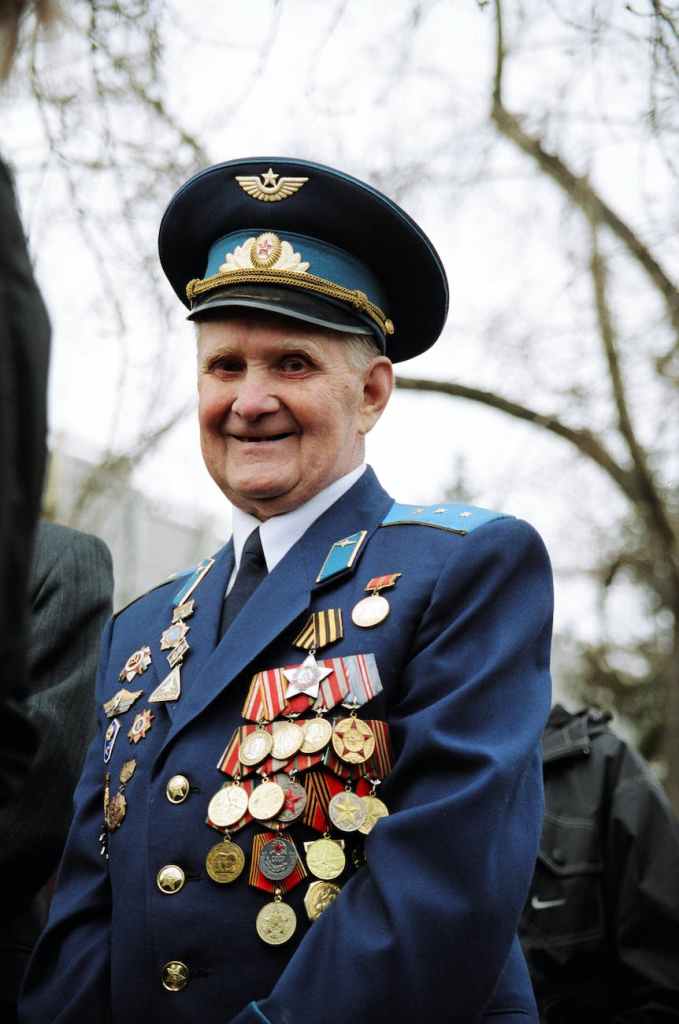
TOP REASONS FOR LEAVING ARMED SERVICES (the percentages for each of these reasons was around 30% give or take a few percentages)
Research shows that ” The median age of veterans today is 65 years”, “Vietnam Era veterans have a median age of about 71, and World War II veterans are the oldest with a median age of about 93” (Vespa, 2020). which means that a large number of veterans are either at full retirement age, or are coming close to it. Many issues are faced by civilian senior citizens, and for veterans there are even more complicating factors.
- Veterans of color
Black/ African American veterans
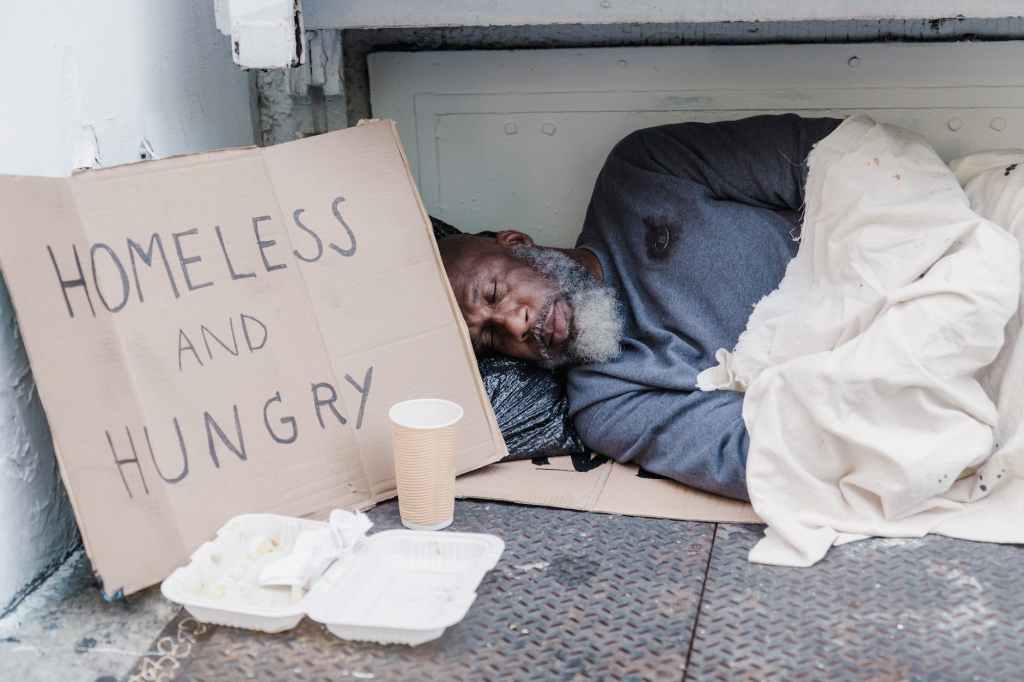
In 2020 there were reportedly 2.3 million veterans who listed their race as Black/African American.
While it is true that only 11.5 % of veterans in 2020 were black, it is also true that 32% of homeless veterans were black. This means that there is still a major problem with inequality and racial disparities among veterans.
Top Reasons for Leaving Armed Services (listed in order from most reported reason to lesser reported reason)
- Lost faith or trust in military or political leadership
- Family Reasons
- Pursue education and training opportunities
- Military retirement (20 years or more)
- Career change/ alternative job opportunities
- Completion of military service obligation (less than 20 years)
TOP TRANSITIONAL CHALLENGES (Listed in order from most reported difficulty to lesser reported difficulty)
- Getting a job
- Navigating VA programs, benefits, and services
- Financial struggles
- Employment preparation 38% Depression
- Skills translation
- Getting socialized to civilian culture
- Disability
- Contradictory information from different sources
- Understanding GI Bill benefits
Hispanic/ Latinx Veterans
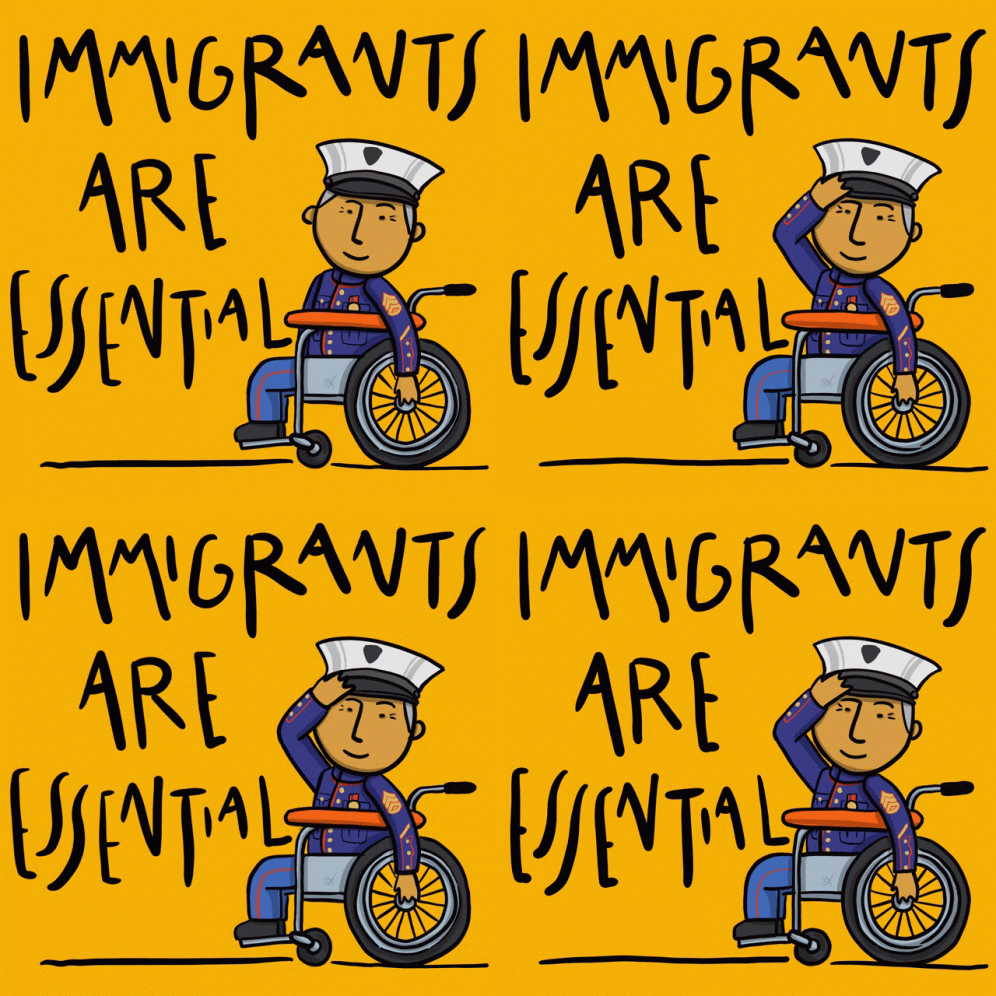
In 2020 it was also reported that 1.3 million U.S. veterans were of Hispanic descent.
Top Reasons for Leaving Armed Services (listed in order from most reported reason to lesser reported reason).
- Pursue education and training opportunities
- Lost faith or trust in military or political leadership
- Family reasons
- Completion of military service obligation (less than 20 years)
- Career change/ alternative job opportunities
- Concerns & grievances about service experiences
TOP TRANSITIONAL CHALLENGES (Listed in order from most reported difficulty to lesser reported difficulty)
- Getting a job
- Navigating VA programs, benefits, and services
- Financial struggles
- Getting socialized to civilian culture
- Skills translation
- Employment preparation
- Depression
- Understanding GI Bill benefits
- Disability
- Civilian day-to-day life
Service members of color and of Hispanic origin still face a number of challenges both in the service and while transitioning out of the service.
- Disabled Veterans
Sadly, there is a high rate of disability directly related to serving among veterans with 43% of Post-9/11 veterans having disabilities due to their time in the service. This is a rate that is much higher than it has been for any other group of U.S. veterans (Vespa, 2020).
While surveying men of the very young age of 25, researchers found that when compared with men who had never served in the military, men who had served in the military had a higher likelihood of developing chronic medical conditions.
Chronic health conditions that male veterans were more likely to report suffering from included:
- hypertension
- arthritis
- diabetes
- cancer
- stroke
60.1%
Of Veterans 65 and older suffer from at least one chronic health condition.
29%
Of female veterans between the ages of 25 and 64 are suffering from arthritis.
32.2%
Of male veterans between the ages of 25 and 64 suffer from hypertension
This all makes up a large portion of veterans who are surviving through everyday with some type of chronic health condition that can most likely be attributed, at least in part, to the heavy toll that comes with miilitary life.
General struggles of veterans
- Unemployment
- Sense of self
- Service Related Disability
- Homelessness
- Physical Handicaps
- Poor Mental Health
“Without access to quality care, the daily realities of living with mental and physical disability can quickly compound and lead to substance abuse, unemployment, poverty, and the break down of familial support networks”
(Statista Research Department, 2022)
Homelessness

As of this year reports show that there are 16.5 million veterans in the U.S. and a large number of those veterans are homeless with nearly half of the county’s homeless veterans having no type of shelter (Statista Research Department, 2022). Our veterans deserve better, these human beings deserve better.
Most veterans who are homeless identify as men (91%).
3% of homeless veterans are Native American or Alaskan Native despite the fact that this ethnicity group only makes up .7% of all veterans.
4.8% are Multi racial despite making up a total of 2.1% of total veterans.
Health struggles
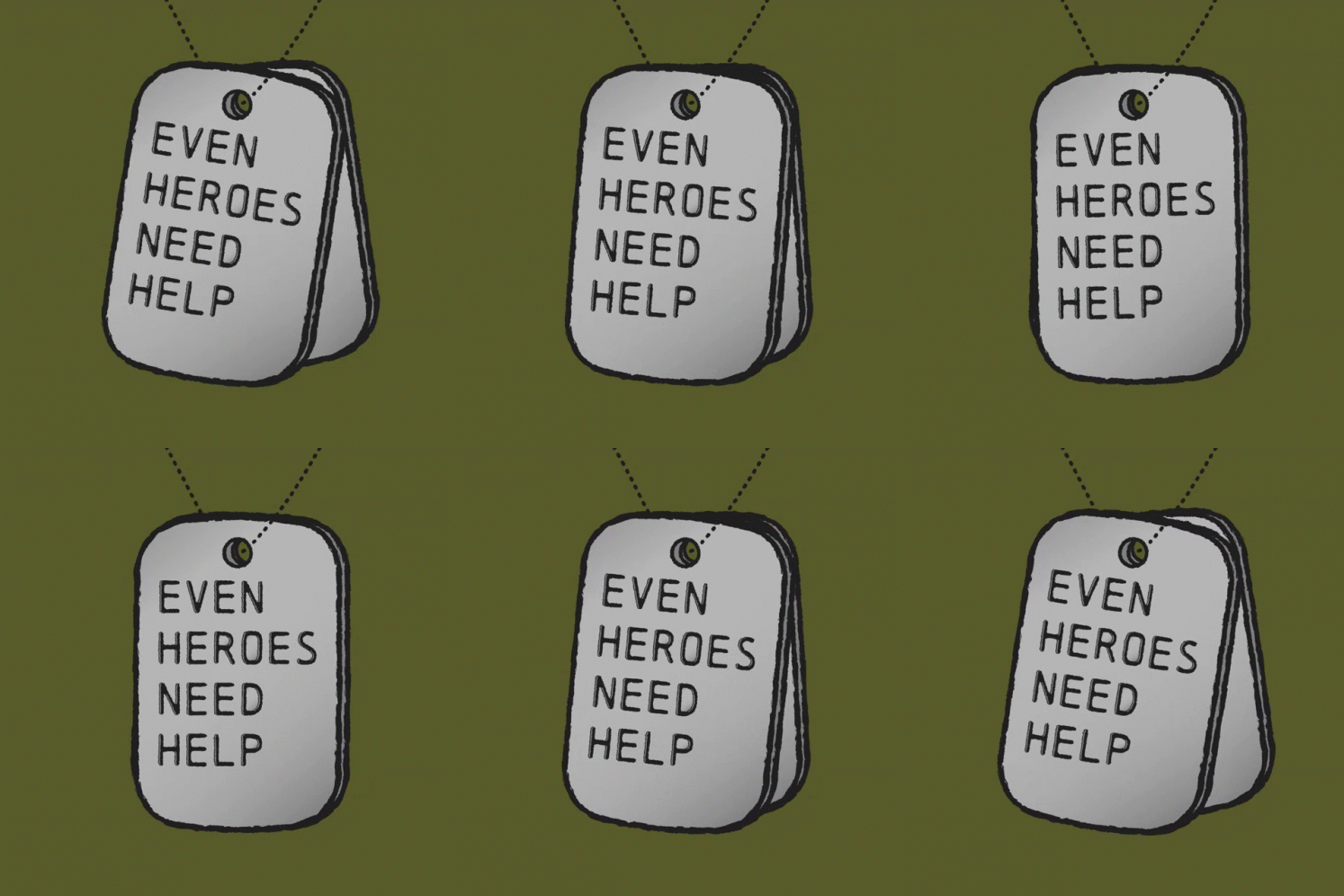
Over 75% of veterans in recent years have suffered from conditions like:
- Post Traumatic Stress Disorder (PTSD)
- Depression
- Anxiety
44%
of veterans have reported that they have thought about taking their own lives.
Nearly a large percentage (85.1%) of veterans were reported to be suffering from untreated substance use disorders in 2019 (Statista Research Department, 2022).
9.8%
Of U.S. veterans had experienced a severe depressive episode in 2019 alone. That may not seem like much, but that is large when you consider that the 9.8% refers to a large number of total human beings
Any one of the millions of veterans in the United States is at an increased risk for struggling with this serious issue.
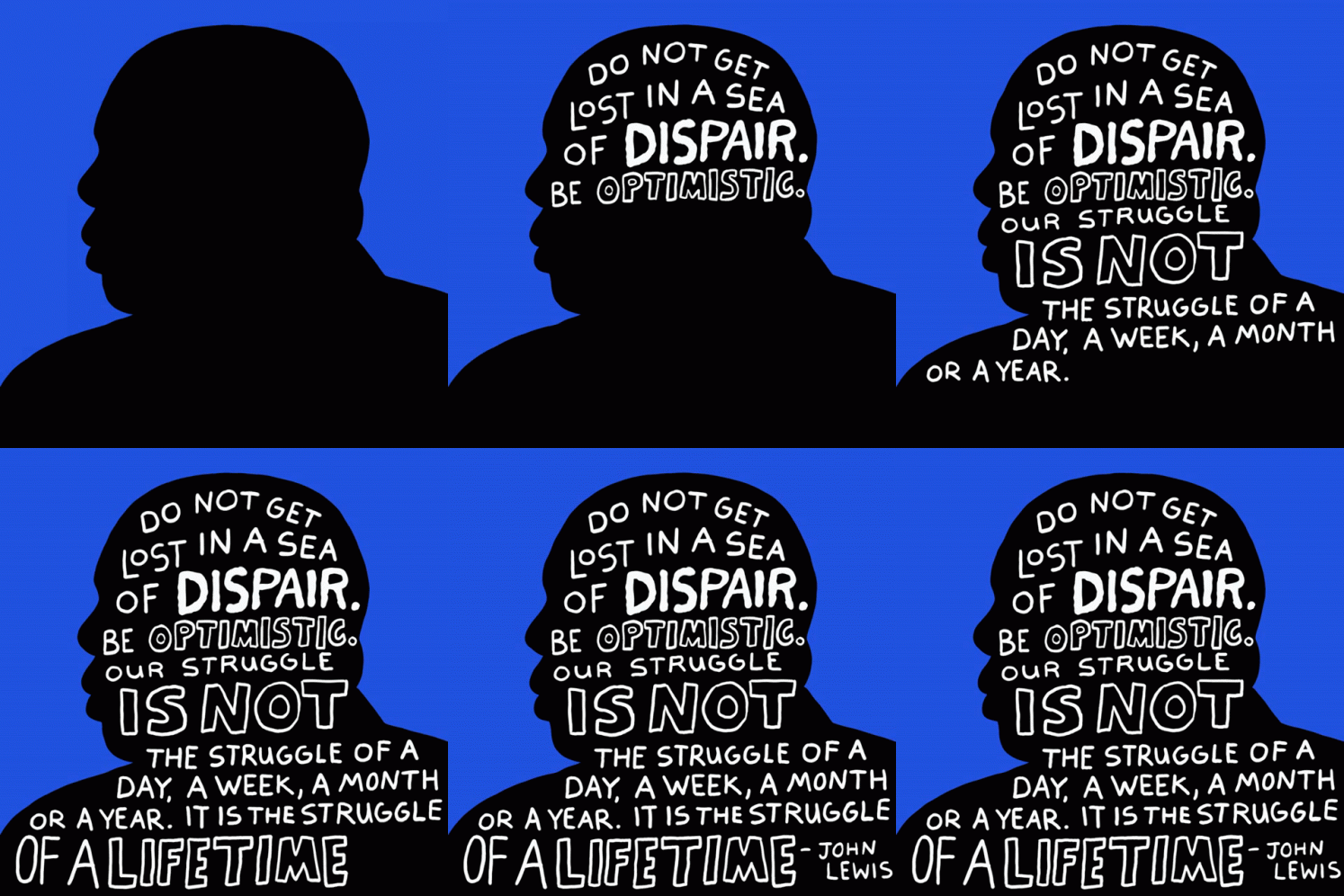
29.5%
Of Veterans struggling with their mental health were also reported to have used illicit substances in 2021.
13%
Of Veterans reporting using marijuana in 2021, which is not illegal everywhere, and can be used medicinally in some cases.
10%
Of Veterans between the ages of 18 and 25 have reported having substance use disorders.
Only 6% of veterans rate their overall health as excellent.
A survey done in 2021 found that over 1/3rd veterans felt that the medical attention they received from the department of Veterans Affairs (VA) is subpar compared to the care received in civilian medical centers. Over 1/3rd felt they received the same level of care when compared with other medical centers, and less than 1/3rd thought that the care they received was better at the VA than at other centers.
While veterans are normally aware of the fact that there are some agencies like the VA and programs like the Wounded Warrior’s Project (WWP) to help with physical health conditions, many veterans have stated that they do not generally know what supports if any, are available for mental health concerns.
An even higher percentage of veterans still feel to ashamed or embarrassed to ask for such help also.
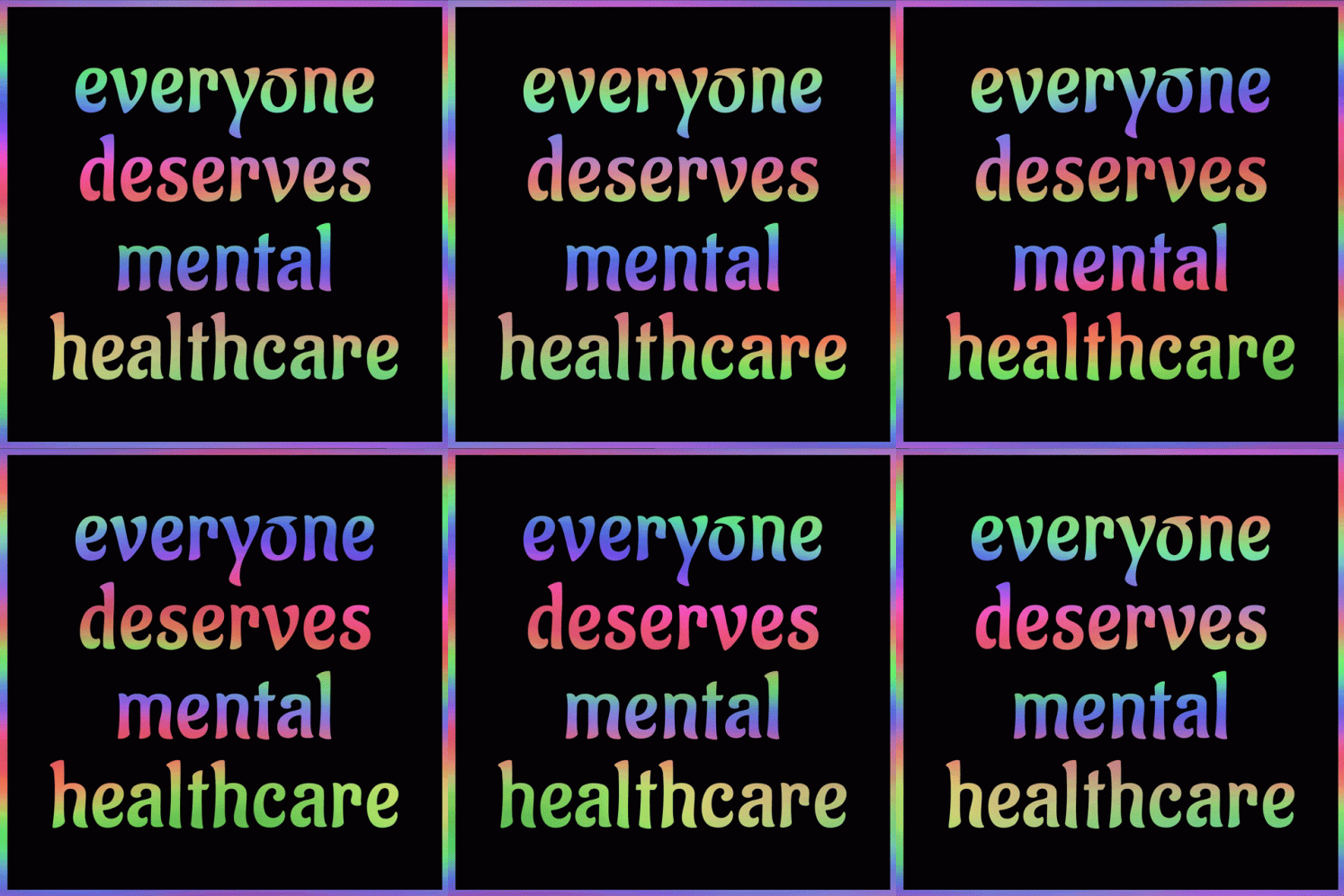
This is not surprising as seeking mental health care still comes with a great deal of social stigma even today, and within the military there is the expectation that those serving will be the toughest of the tough. Sadly for many people a “tough” person hides their pain and pretends everything is OK.
This is absolutely not true! It takes true strength to ask for help when you need it, and seeking help from licensed professionals can be life changing and life saving for most people who give it a chance and who are ready to get help.
Where I got my information
https://www.census.gov/library/publications/2020/demo/acs-43.html
https://www.dav.org/learn-more/about-dav/
https://www.statista.com/topics/3488/veteran-health-in-the-us/
https://ctveteranslegal.org/a-continued-struggle-for-equality-lgbtq-service-members-and-veterans/
https://ivmf.syracuse.edu/article/black-and-african-american-in-the-military/
https://ivmf.syracuse.edu/article/hispanic-and-latinos-in-the-military/
https://sparks.wnba.com/challenges-faced-by-women-veterans/
https://www.statista.com/topics/3450/veterans-in-the-united-states/#topicHeader__wrapper
 Mental Health Blog | Fight4mylife | United States